Reading Goreme history in the rock
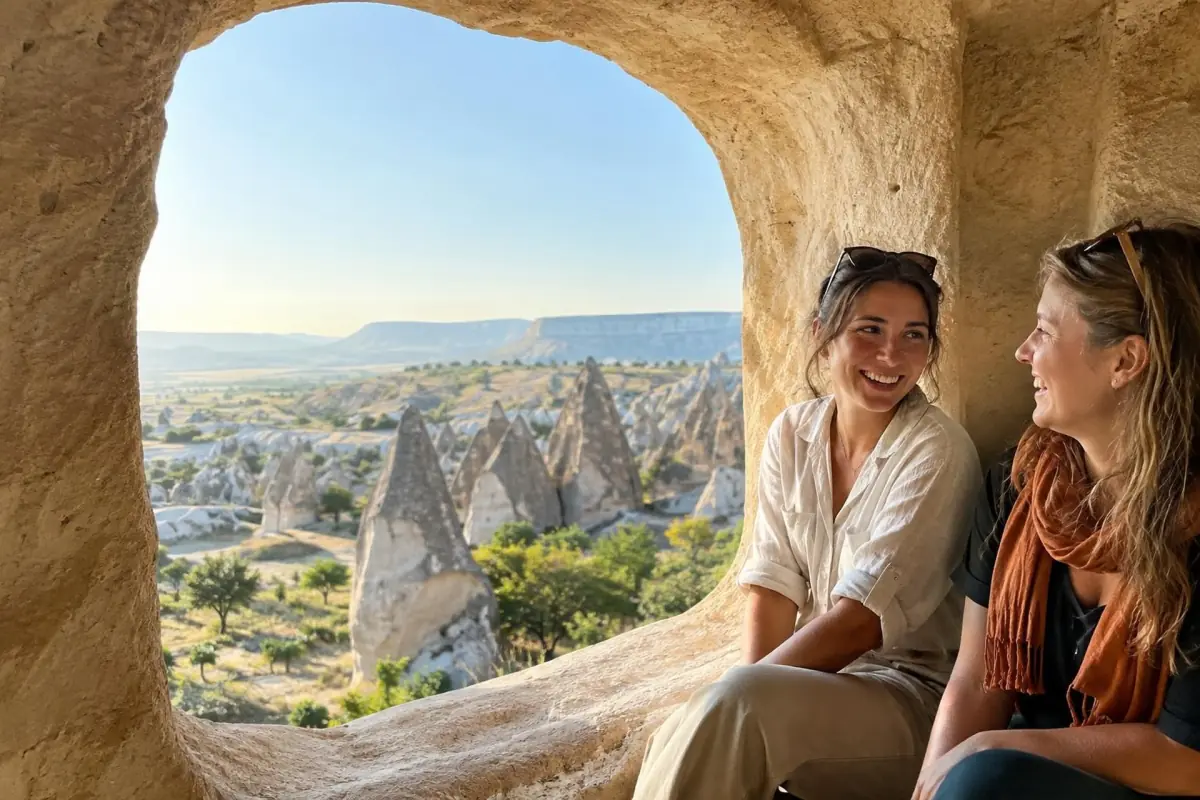
Goreme history comes into focus when you look beyond the outlines of the rock formations. Doors, chambers and painted surfaces show how people used the landscape, turning rock into places for worship and everyday life. The open-air museum is a useful starting point because churches, chapels, dining rooms and living spaces can be understood together. It gives a human scale to scenery otherwise dominated by valleys, ridges and fairy chimneys.
The landscape itself has a volcanic origin and was shaped by erosion. Its cultural story lies in the ways that people adapted those forms. Keep those two threads together as you explore: the appeal of Göreme is both natural and architectural. For the practical arrangements at the principal site, use the open-air museum visit guide, which separates admission, the Dark Church and guided tours.

Architecture and religion in the monastery landscape
The museum area's intensive monastic use extended from the fourth to thirteenth centuries. Rather than assigning that whole period to every room, think of it as the broad context for a landscape of religious and domestic spaces. Churches and chapels served worship, while dining and living rooms supported everyday communal life. That relationship is as revealing as any single facade.
Biblical frescoes add another layer. They turn the interior into a place where religious stories were represented visually. Looking at the image and the room together helps explain why a guide with expertise in iconography can be useful. The specialist museum tour focuses on four churches and the monastery's past, making it a focused choice for visitors interested in painted religious spaces.
Museum history tour
An iconography expert explains the monastery and guides you through four museum churches.
Hand-picked tours, booked through GetYourGuide. Prices are indicative starting prices in euros (as of November 2026). Tap a tour for live availability and the current price in your currency.

Understand the churches with a museum specialist
An English-speaking iconography expert leads a one-hour museum visit with admission and four churches. Dark Church entry is additional; hotel transport is available with the transfer option.
Frescoes and the Dark Church
The Dark Church illustrates the connection between a building's form and its painted decoration. Only limited light enters through a small window, explaining both its name and the preservation of the fresco colours. Take the room's light and surfaces as part of the experience, alongside the scenes themselves. It is a particularly useful example of how architecture affects what survives for visitors to see.
A museum-focused guide helps interpret those religious images and the wider monastic setting. The tour offered here is a visit to the museum, with English-language expertise in iconography. For a broader day connecting the museum and an underground city, the private tour options provide a different format. Decide whether your interest is a close reading of the churches or a comparison between different kinds of rock-cut spaces.
Ancient history and the underground cities
Derinkuyu and Kaymaklı broaden the picture beyond the churches at Göreme. Both belong to the serial World Heritage property. Derinkuyu's description includes narrow connecting tunnels, storage areas, ventilation shafts and stone closing mechanisms. Kaymaklı also has connected rooms, kitchens and storage spaces, with four illuminated visitor levels described. These are distinct places, each with its own spatial character.
Use that contrast to guide your choice of outing. Painted church interiors explain one aspect of life in rock-cut spaces; an underground complex prompts questions about movement, supplies and ventilation. The Green Tour guide compares excursions to Derinkuyu and distinguishes it from Kaymaklı. A shared regional setting does not make the sites interchangeable stops.
Pigeon houses, agriculture and the World Heritage landscape
The historical landscape also includes work beyond religious life. Around Uçhisar and Pigeon Valley, pigeon houses were used to obtain fertilizer for agriculture. That gives the small openings in the rock a practical meaning alongside the churches and living rooms. The valley links the foot of Uçhisar with Göreme; the walking guide places those landscapes in the context of routes from town.
The UNESCO inscription in 1985 recognizes cultural and natural values together. Its title includes Göreme National Park and the Rock Sites of Cappadocia, covering a serial landscape rather than Göreme town alone. Erosion, tourism pressure and development are concerns for this irreplaceable heritage. Seeing the rooms as parts of a larger inhabited landscape gives the visit more depth than treating every rock opening as the same kind of monument.
Questions about Goreme's past
When did the landscape become World Heritage?
The serial property was inscribed in 1985. It combines cultural and natural values and includes rock sites and underground cities beyond Göreme itself.
What were the museum rooms used for?
The museum includes churches, chapels, dining areas and living rooms. Together they illustrate the religious and everyday aspects of monastic life.
Is the guided visit a town history walk?
The specialist visit takes place at the open-air museum and covers four churches with an English-speaking iconography expert. It focuses on the museum and the monastery's past.
Why were pigeon houses built?
Historical pigeon houses around Uçhisar supplied fertilizer for agriculture, connecting the carved landscape with the practical work of cultivation.